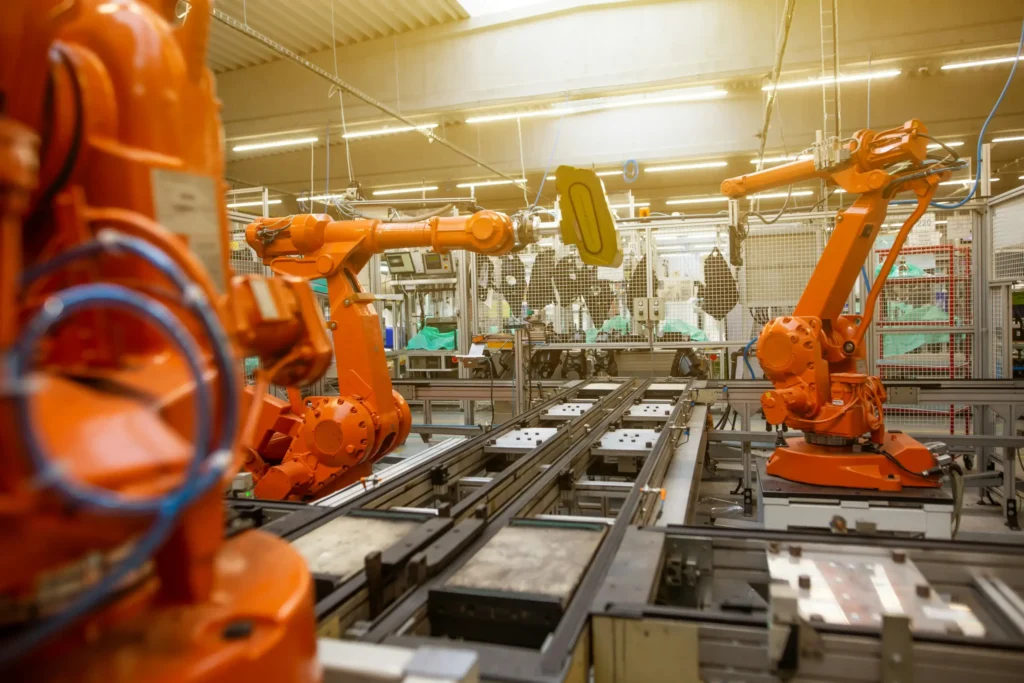
The traditional paradigm of linear manufacturing is dissolving. In its place, a new topology of networked, kinetic assembly nodes is emerging—driven by advanced edge compute and hyper-responsive neural protocols.
For decades, the assembly line remained essentially unchanged from Ford’s original concept: a sequential progression of fixed stations. Today, we are witnessing the complete architectural dissolution of this rigid structure. By distributing intelligence directly to the robotic effectors via ultra-low-latency edge networks, we enable machines to self-organize dynamically around the product being assembled.
The Shift to Asymmetrical Deployment
The true breakthrough lies in asymmetrical deployment logic. Rather than programming deterministic
paths, modern manufacturing relies on stochastic algorithms that allow robotic swarms to optimize their
own spatial choreography. This requires a profound reimagining of factory floor telemetry.
Core Architectural Pillars
Implementing this next-generation topology requires three fundamental shifts in hardware infrastructure:
Decentralized Edge Compute
Moving processing power from central servers directly to the joints and effectors of the robotic units, reducing latency to near zero.
Kinetic Telemetry Networks
Deploying high-frequency, multi-modal sensor arrays that map the factory floor in four dimensions (X, Y,
Z, and time).
Adaptive Neural Protocols
Software architectures that allow machines to learn and adjust their parameters locally based on real-
time material variance.
The integration of these pillars creates what we term a “Fluid Assembly Matrix.” It represents a departure
from rote execution towards genuine mechanical cognition.